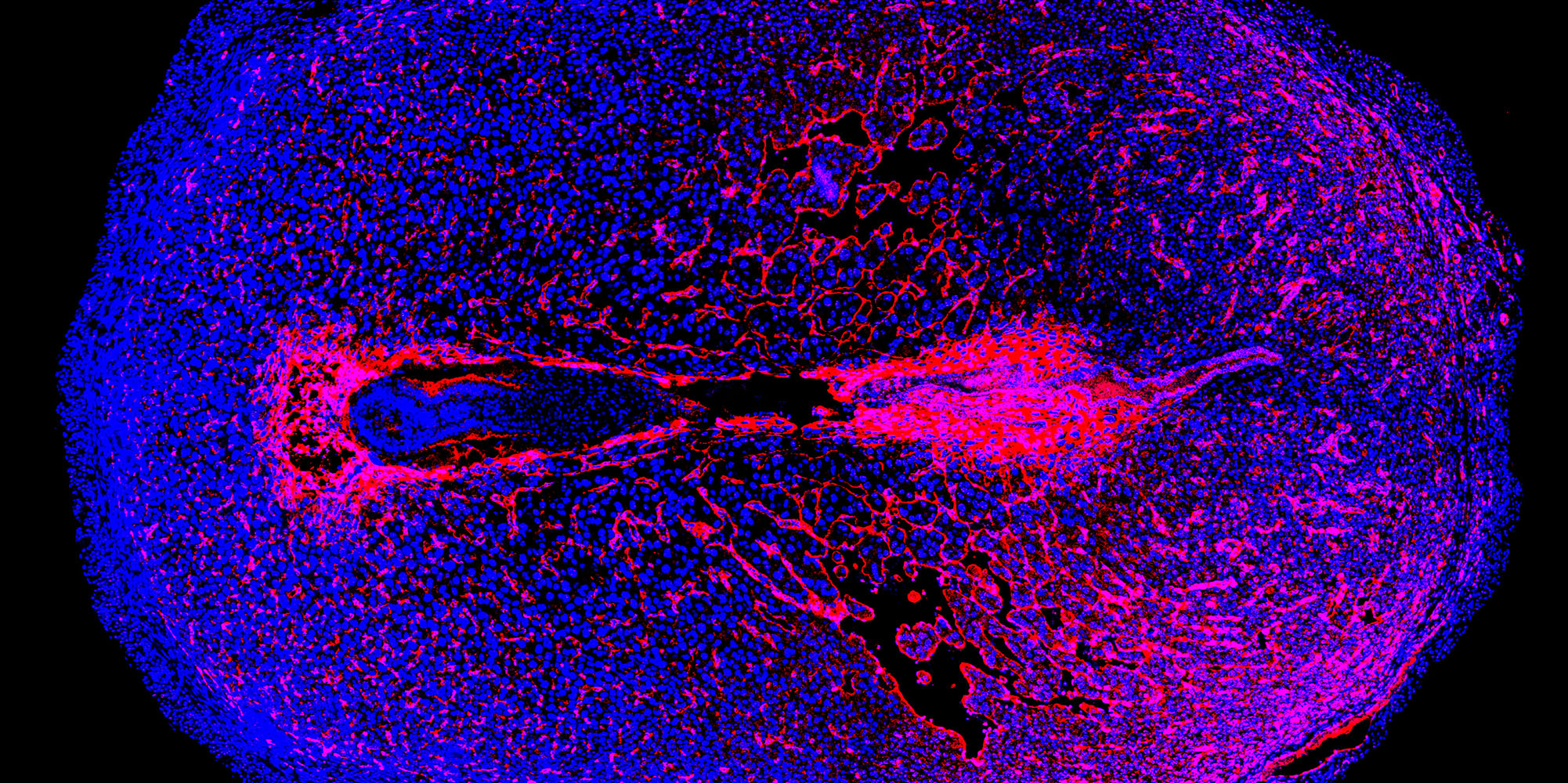


The Environmental Impact on Reproductive Health theme explores the effects of environment, diet, and stress on reproductive health and fertility.
Featured Stories

Research
Elephant genomes reveal a past of continental connectivity and a future of increasing isolation
Research
Spatial Mapping Technique Allows Researchers to Understand Tumor Architecture

Research
Researchers Identify Underlying Mechanisms that Help Explain Link Between PFAS Exposure and Testicular Cancer

Research
Wild giraffes lose their conservation safety net as zoo populations hybridize

Research
Epigenetic Switches Behind PFAS Cell Damage Identified

Research
Researchers unlock new insights into granular hydrogels for biomedical applications